" height="15.432500047683732px" id="hCb5KH2pS" width="93.3789050292969px"/><path d="M 0.631 2.643 C 3.443 2.213 6.278 1.883 9.138 1.635 C 12.008 1.388 14.883 1.223 17.761 1.125 C 20.638 1.028 23.548 0.988 26.441 0.995 C 29.333 1.003 32.216 1.053 35.103 1.128 C 37.991 1.203 40.876 1.298 43.761 1.398 L 44.833 1.435 C 45.093 1.445 45.343 1.2 45.331 0.938 C 45.318 0.66 45.113 0.45 44.833 0.44 C 41.928 0.34 39.023 0.238 36.118 0.16 C 33.213 0.083 30.343 0.023 27.456 0.005 C 24.561 -0.012 21.666 0.013 18.773 0.098 C 15.883 0.183 12.998 0.33 10.116 0.56 C 7.233 0.79 4.313 1.11 1.428 1.525 C 1.073 1.575 0.721 1.63 0.366 1.683 C 0.108 1.723 -0.057 2.06 0.018 2.295 C 0.108 2.575 0.353 2.685 0.631 2.643 Z" fill="rgb(255, 255, 255)" height="2.6515970595970586px" id="p7maX2MqI" transform="translate(46.125 12.875)" width="45.33113560316481px"/></g></svg>)
Latest Posts
Why Does Rejection or Criticism Hurt So Intensely?
Dec 3, 2025
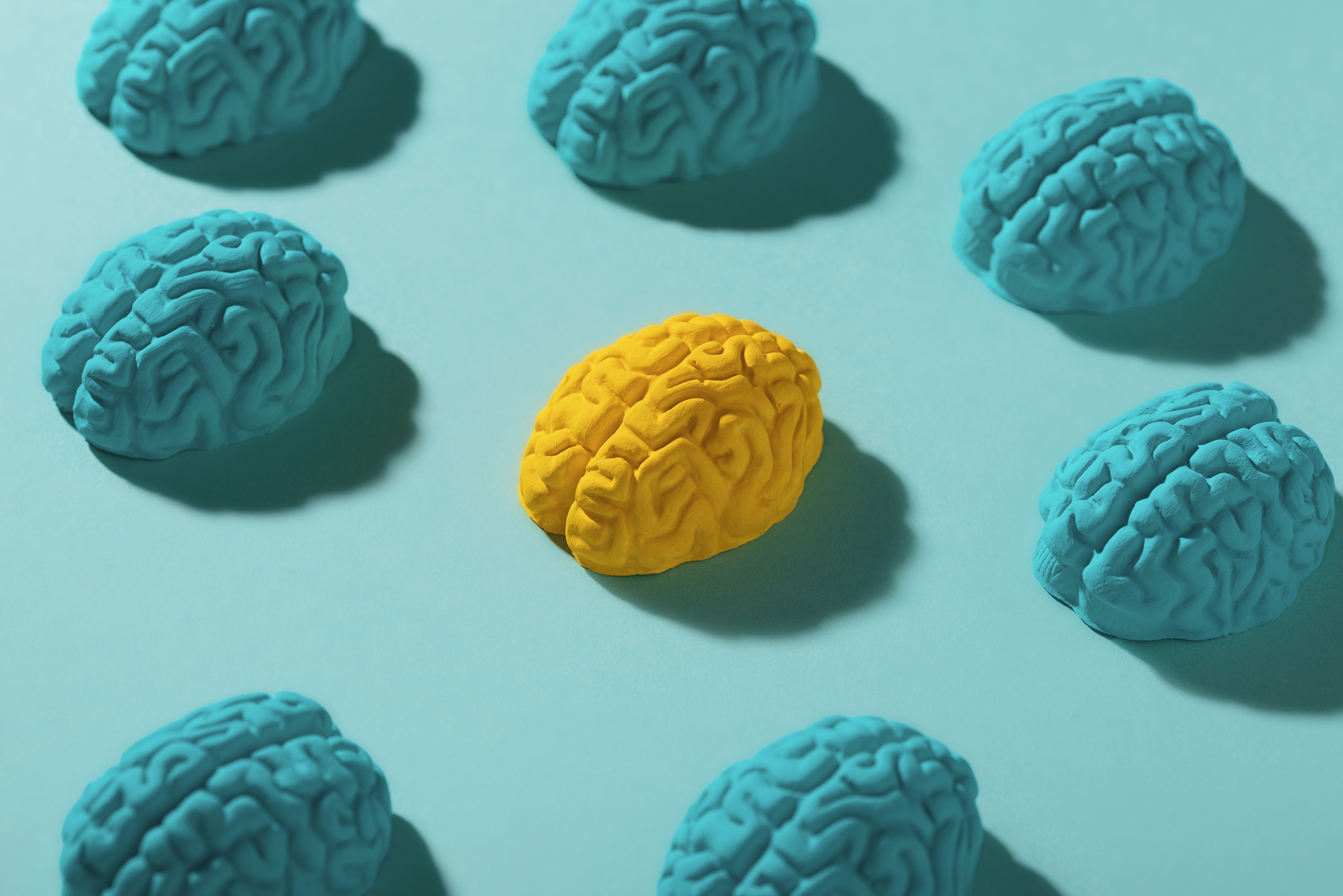

For everyone living with ADHD — whether you already know your diagnosis or are still seeking explanations for your experiences — it’s common to feel deeply hurt in situations involving criticism, rejection, or even underperformance in work or academic settings.
This can be explained by a symptom that is rarely discussed but widely experienced: the emotional dysregulation associated with ADHD. Let’s explore what it is, how to recognise it, cope with it and when to seek help.
What is emotional dysregulation?
Often, when we think of impulsivity, we assume it refers only to difficulty controlling behaviour. However, it not only affects a person’s ability to manage actions, but also leads them to react emotionally before they’ve even had a chance to think about what’s happening (Barkley, 2015).
This emotional impulsivity is known as emotional dysregulation. Although it is not exclusive to ADHD, it leads to one of the most misunderstood and misinterpreted symptoms of the condition.
Emotional dysregulation in ADHD occurs when the part of the brain responsible for rapid emotional responses becomes activated without its counterpart — the control centre — being able to moderate it in time. The result is sudden mood changes, irritability, and intensely felt emotions in situations that others might say don’t justify such a strong reaction.
There’s a lot happening in the brain of a person with ADHD, yet most of the time their surroundings are unable to understand what’s going on. It is precisely this lack of understanding that leads to mistreatment, exclusion, delays in diagnosis and treatment, and increased functional impairment (Groves et al, 2022).
Understanding rejection sensitivity
Talking about emotional dysregulation in ADHD also means talking about rejection sensitivity.
Rejection sensitivity stems from emotional hypersensitivity, which is often linked to early experiences of excessive criticism and invalidation. In other words, anyone who has grown up in a social environment perceived as hostile, or who has low self-esteem, may experience this symptom — whether they have ADHD or not.
This type of emotional hypersensitivity is associated with feelings of sadness, guilt, abandonment, and anxiety, which can lead to social withdrawal — often as a way to prevent or minimise the risk of rejection. In rejection sensitivity, emotions tend to linger for hours or even days.
If we imagine for a moment what childhood and adolescence are often like for many people with ADHD, we can understand why rejection sensitivity is such a common symptom in this group. In fact, people with ADHD experience an extreme form of this symptom known as rejection sensitive dysphoria (RSD).
What is rejection sensitivity dysphoria (RSD)?
Earlier, we mentioned that emotional dysregulation is the cause of one of the most misunderstood and misinterpreted symptoms of ADHD — we were referring to rejection sensitive dysphoria (RSD).
RSD is an extreme, instantaneous, and deeply painful emotional reaction, rooted in the brain and characteristic of ADHD (Surman et al., 2021). Unlike rejection sensitivity, RSD episodes are brief, typically lasting only minutes and rarely more than two hours. The predominant feelings are usually anger or shame.
It is common for patients to describe their emotions as “very intense”, “overwhelming”, or “extremely painful”, and to describe themselves as “not resentful”, referring to their ability to return to their usual emotional state quite quickly.
In the long term, this intense and disruptive experience limits the person’s ability to progress in their studies, advance in their career, or build and sustain relationships. Their own fear of rejection and of overwhelming emotional experiences predisposes them to social withdrawal and stagnation.
How does RSD show up in daily life?
RSD can manifest in two different ways, depending on whether the feelings are internalised or externalised (Dodson, n.d.). In the first case, an episode of RSD may appear similar to a major mood disorder and can include suicidal thoughts. In the second, it presents as an outburst of anger directed towards the person or people perceived as attackers.
We might recognise RSD in a child or adolescent who explodes with anger when asked to complete a task, fulfil a duty, improve their attitude, or correct their manners — they may run away from home or even become physically aggressive. It can also be seen in a university student who experiences a breakdown in response to constructive criticism, or in an employee who, despite their potential, avoids sharing ideas or taking initiative because even the possibility of disapproval feels unbearable.
Learning to cope with RSD
For those who experience this kind of emotional volatility, it’s important to learn psychotherapeutic techniques that can help them regulate their emotions and respond differently to triggers. Let’s look at some of these strategies:
Know your triggers: Identify the situations, people, or behaviours that trigger your RSD episodes. Keep in mind that sometimes your own self-critical and unkind inner dialogue can be one of those triggers.
Practice self-compassion: Learn to treat yourself kindly from the inside out. Repeat positive affirmations that strengthen your awareness of your virtues and strengths. It helps soothe the emotional intensity that follows rejection.
Understand your thinking patterns: When fear of rejection dominates your day, pay attention to the story that repeats in your mind. What does being rejected — or not being liked by everyone — say about you?
Keep a journal: Record your episodes, the thoughts that arise and linger, and the predominant emotions. This will help you build awareness and develop new perspectives.
Accept without judgement: Acknowledge your emotions without labelling them as good or bad. By suspending judgement, you make it easier to experience them without as much distress.
Emotional distancing: This is an alternative to the previous technique. If experiencing the emotion feels too intense, try viewing the situation of rejection through the eyes of an outsider.
Practice emotional regulation techniques
There are additional resources that can help deactivate or moderate intense emotional responses. Most of these are mindfulness-based practices, and the following techniques are a good place to start:
Diaphragmatic breathing: This is the most effective way to deactivate the brain’s response to a perceived threat.
Progressive muscle relaxation: This technique involves tensing and then releasing the muscles of the body, helping to reconnect with feelings of wellbeing and safety.
Guided imagery: This practice involves bringing pleasant scenes to mind, helping to distract and calm the mind.
Grounding techniques: These are exercises that engage the five senses to anchor awareness in the here and now, reducing rumination and stressful thoughts.
With regular practice, these techniques become healthy habits you can rely on whenever you need to restore calm and balance. In fact, mindfulness-based practices can significantly reduce emotional dysregulation and improve attention control in individuals with ADHD (Mitchell et al., 2013).
When to seek support
When rumination about the possibility of rejection, self-criticism, or the intensity of emotions exceeds your ability to cope — or when you feel unable to control how you react to them — it’s time to seek professional help.
Emotional dysregulation, in all its forms, is a valid reason to consult a specialist who can explore the underlying causes of this kind of emotional impulsivity and establish a plan of action to prevent serious consequences.
As we mentioned at the beginning, this is a symptom that is rarely discussed but widely experienced. That’s why the best option is to reach out to a professional who specialises in ADHD. Choose to live a life where your emotions no longer dictate your future.
Last updated December 2025
Written by Dr. Julieth Diaz for ADHD Test
Important: This article is for information only. Diagnosis and treatment are determined and overseen by a qualified clinician. If you feel affected, contact your GP.
References
Barkley, R. A. (2015). Emotional dysregulation is a core component of ADHD. In R. A. Barkley (Ed.), Attention-deficit hyperactivity disorder: A handbook for diagnosis and treatment (4th ed., pp. 81–115). The Guilford Press.
Dodson, W. (n.d.). New insights into rejection sensitive dysphoria (RSD) & emotional dysregulation in ADHD. ADDitude. https://www.additudemag.com/rejection-sensitive-dysphoria-adhd-emotional-dysregulation/
Groves, N., Dvorsky, M. R., Cheung, C. H. M., & Sonuga-Barke, E. J. S. (2022). Executive functioning and emotion regulation in children with and without ADHD. Research on Child and Adolescent Psychopathology, 50(6), 721–735. https://doi.org/10.1007/s10802-021-00883-0
Mitchell, J. T. et al. (2013). “Mindfulness meditation training for ADHD: A feasibility trial.” Journal of Attention Disorders.
Surman, C. B. H. et al. (2021). “Rejection sensitivity and emotional dysregulation in adults with ADHD.” Journal of Attention Disorders.